


The trip
Embark on an unforgettable journey to the Harbin Ice and Snow Festival in Dōngběi (Manchuria), the far northeast of China. Between majestic illuminated ice sculptures and snow artworks, the festival offers a surreal and magical setting.
- Duration
- 10 days / 9 nights
- Group
- 4 to 12 people
- Physical effort
- ModerateFull days, some walks of a few hours, also on uneven ground.
Often icy terrain and roads - Climate
- Extreme cold ›
- Transfers
- Train: about 480 km
- Trip type
- Single base By train
- Language
- Italian and English
Walk through intricate ice labyrinths by day, capturing the crystalline beauty of ephemeral artworks, while golden evening light enhances their grandeur. At night, the sculptures transform into illuminated masterpieces, creating a breathtaking visual spectacle. With your camera ready to capture every detail, explore the incredible blend of Chinese tradition and artistic creativity, discovering local culture through culinary delights.
On this photo tour between Changchun and Harbin, prepare to capture the magic and vibrant energy of one of the world’s most extraordinary winter festivals, without forgetting the history of Manchukuo, the puppet state created by Japan in the 1930s, of which Changchun was the capital: the Imperial Palace where Puyi lived, the last emperor of China made famous by the film by Bernardo Bertolucci, the monumental Eight Ministries, and the historic Man'ei film studios.
Itinerary
-
Day 1 · Sat 26 Dec
Departure
Flight from Europe with a stopover, likely in Beijing or Shanghai, heading to Changchun.
Night on the road · Flight
-
Day 2 · Sun 27 Dec
Arrival in Changchun
Arrival in Changchun in the early afternoon and check-in at the hotel. Changchun today is the capital of Jilin Province, but between 1932 and 1945 it was Xinjing, the "New Capital" of Manchukuo, the puppet state created by Japan after the invasion of Manchuria. Japanese urban planners designed it from scratch as a showcase of their empire in Asia: wide tree-lined avenues, circular plazas, and monumental buildings, still clearly recognisable in the city's fabric.
At sunset, we will reach Renmin Square, the former Datong Square, one of the nodes of this urban layout. At its centre stands the monument to the Soviet Red Army soldiers, who in August 1945 put an end to Manchukuo. In the evening, dinner in the Guilin Road area, among the busiest restaurants and street stalls frequented by locals.
- by plane
Hotel in Changchun
-
Day 3 · Mon 28 Dec
Changchun and the Last Emperor
This day is dedicated to the figure of Puyi, the last emperor of China. Ascending the Qing dynasty throne in 1908 at just two years old, Puyi was forced to abdicate after the 1911 revolution and spent years confined in the Forbidden City as an emperor without an empire. In 1932, the Japanese brought him to Changchun and made him head of Manchukuo, first as executive leader and from 1934 as emperor. He was a figurehead ruler: every decision was made by the Japanese army.
In the morning, we will visit at leisure the Manchukuo Imperial Palace, where Puyi lived and "ruled" until 1945. The complex, carved from the buildings of the old salt tax office, preserves the private apartments of the emperor and empress Wanrong, the official audience halls, the gardens, and the air-raid shelter. A large museum tells the story of the Japanese occupation and Puyi’s life after the war: captured by the Soviets in 1945, handed over to China in 1950, and "re-educated" for nearly ten years in the Fushun prison, he ended his days in Beijing as an ordinary citizen. He died in 1967.
This is the story told by Bernardo Bertolucci in the film The Last Emperor (1987), winner of nine Academy Awards, including Best Picture and Best Director. It was the first Western film allowed to shoot inside the Forbidden City, and some scenes were filmed here in Changchun. During the visit, we will retrace the film’s locations, from Puyi’s coronation as Manchukuo’s emperor to his gradual downfall.
In the afternoon, we will visit the Changchun Film Studio Museum, housed in the original buildings of the Man'ei, the Manchukuo film company founded in 1937 to produce propaganda films. It was directed by Amakasu Masahiko, a character who also appears in Bertolucci’s film, played by Ryūichi Sakamoto, who also composed the Oscar-winning soundtrack. After the war, the studios became the "cradle of New China cinema." The museum allows you to follow the history of Chinese cinema from the 1930s to today, among sets, backdrops, and vintage cameras.
Hotel in Changchun
-
Day 4 · Tue 29 Dec
Changchun, the Capital of Manchukuo
In the morning, we will stroll along Xinmin Avenue, the monumental axis of Manchukuo’s capital, where the so-called Eight Ministries line up—the seats of the puppet government. These buildings feature a unique architectural style, blending Western masonry with Chinese and Japanese-inspired roofs and towers. This architecture was meant to symbolise the "harmony among peoples" of Asia under Japan’s guidance. Many of these buildings are now university campuses and hospitals, offering excellent subjects for architectural photography, especially under snow. We will continue towards Wenhua Park and the nearby area where Puyi’s unfinished imperial palace once stood.
In the afternoon, we will head to the Jingyuetan forest park on the outskirts of the city, with its large frozen lake and snow-covered woods. In winter, it becomes the place where Changchun residents ski, ice-skate, and walk on the ice—a great opportunity to photograph daily life in the cold Northeast.
Hotel in Changchun
-
Day 5 · Wed 30 Dec
Arrival in Harbin
Morning transfer to Harbin by high-speed train, taking just over an hour. Harbin was born at the end of the 19th century as a hub of the Chinese Eastern Railway, built by the Russian Empire. For decades, it was a cosmopolitan city inhabited by Russians, Jews, Poles, and Chinese, earning the nicknames the "Eastern Moscow" and the "Eastern Paris."
We’ll visit the famous Zhongyang Avenue, the central street of Harbin, the longest cobblestone pedestrian street in all of Asia (about 1.5 km), flanked by buildings in Baroque, Art Nouveau, and eclectic styles. We’ll then reach the Cathedral of St. Sophia, the ancient Russian Orthodox church with its green onion dome, one of the city’s symbols, and the Flood Monument along the riverside. From the riverside, we’ll descend to the Songhua River, completely frozen, where in winter people skate, sled, and spin tops on the ice.
- by train
Transfers: about 240 km by train
Hotel in Harbin
-
Day 6 · Thu 31 Dec
Harbin Ice and Snow World and New Year’s Eve
This day is fully dedicated to visiting the Harbin Ice and Snow World, the largest and most famous ice and snow festival in the world. Every year, thousands of workers and artists extract massive blocks of ice from the Songhua River and build an ephemeral city of palaces, temples, towers, and sculptures, some tens of metres high. By day, we’ll walk through the ice labyrinths, capturing the crystalline beauty of the works. As the sun sets, the golden light enhances their majesty. When night falls, the sculptures light up in coloured lights, transforming into a breathtaking visual spectacle.
New Year’s Eve only: We’ll stay in the park until evening to celebrate the new year in one of the most spectacular places in China, surrounded by lights, music, and thousands of people in celebration.
Hotel in Harbin
-
Day 7 · Fri 1 Jan
Harbin, Winter Swimmers, and Sun Island
New Year’s Eve only: After the New Year’s Eve night, in the morning we’ll head to the Songhua River to meet the winter swimmers, who, with temperatures well below zero, dive into a pool carved into the ice. The first day of the year holds special meaning for them, and between the steam rising from the water and the faces marked by the cold, it’s a unique opportunity for portrait and documentary photography.
In the afternoon, we’ll visit the Snow Sculpture Expo at Sun Island, on the opposite bank of the river, where sculptors from around the world create giant snow artworks. Unlike the ice architectures of the Ice and Snow World, here we’ll photograph the shapes, volumes, and shadows of the sculpted snow.
Hotel in Harbin
-
Day 8 · Sat 2 Jan
Harbin
Morning visit to Harbin, including the Jile Temple, home to a massive golden Buddha statue, and the nearby Temple of Confucius, one of the largest in Northeast China.
In the afternoon, you may independently visit the Unit 731 Museum (about 45 minutes by metro from Harbin’s city centre), a memorial dedicated to the atrocities committed by the Japanese army during World War II, where inhumane experiments on prisoners are remembered to raise awareness about war crimes and promote peace through historical memory. The visit ideally concludes the story of Manchukuo begun in Changchun.
In the evening, visit the Baroque Chinese Quarter (Laodaowai), where at the beginning of the 20th century Chinese merchants built their homes and shops imitating European architecture, enriching it with traditional Chinese decorations.
Hotel in Harbin
-
Day 9 · Sun 3 Jan
Return to Changchun
Return from Harbin to Changchun by high-speed train. Free afternoon for last-minute shopping and photography in the city, followed by a farewell dinner.
- by train
Transfers: about 240 km by train
Hotel in Changchun
-
Day 10 · Mon 4 Jan
Return
Transfer to the airport and flight with a stopover for your return to Europe.
Map
- Train · about 480 km
What's included
Included
- Coordinator speaking English and Italian
- Accommodation in a twin room
- High-speed train (second class) between Changchun and Harbin, roundtrip
- Entry to Harbin’s Ice and Snow World
- Entries to the attractions mentioned in the itinerary
Not included
- Flight tickets
- Visa
- All meals not mentioned
- All alcoholic and non-alcoholic drinks
- Insurance (mandatory)
- Personal expenses
- Tips
- Single room supplement
- Anything not expressly stated
Extras
-
Single room US$ 500 per person
-
Train class
- Second class included
- First class US$ 190
- Business class (best) US$ 320
Climate
Temperatures in Harbin range from -30°C to -15°C, rarely exceeding -10°C during this time of year, so it is essential to bring warm, layered clothing. If needed, we can advise you on what to pack or buy. Despite these temperatures don’t let them intimidate you, it’s worth it!
Good to know
Entry information: visa requirements vary by nationality. Please check and, if necessary, apply for your visa in advance.
Several countries in Europe, including Switzerland, Italy, France, Germany, and others, currently enjoy visa exemption for short-term stays in China. However, visa policies may change: we recommend checking the official website for updated information.
Trip leaders
-
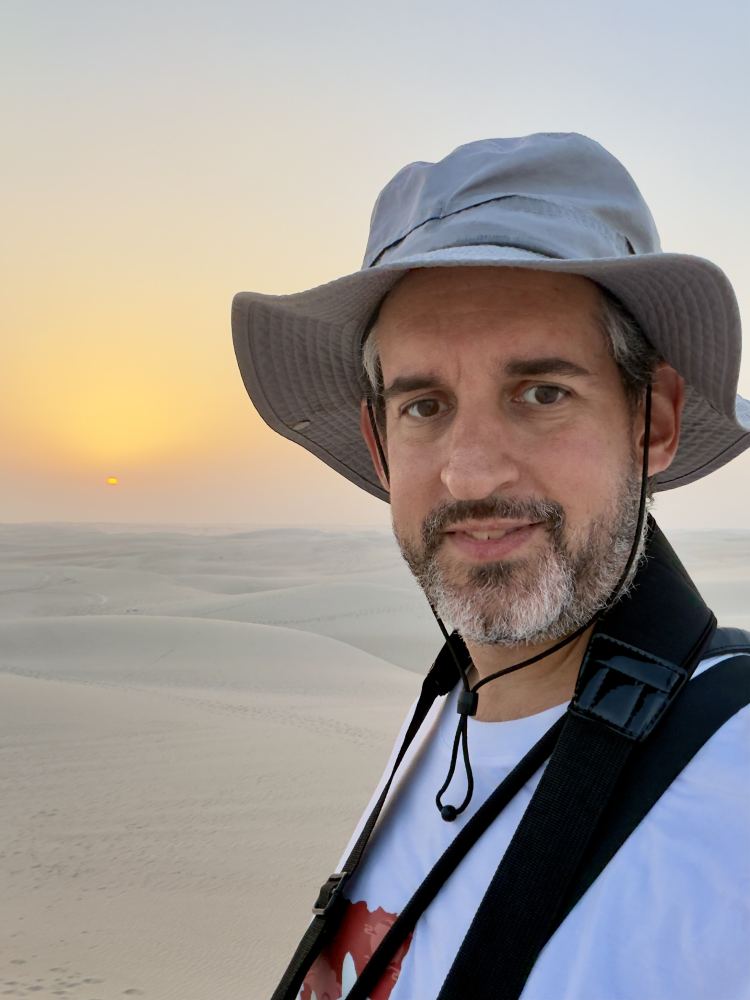
Marco Cortesi
Photographer and geographer
Born in 1981 in Lugano, Switzerland. Graduated in Human Geography at Università degli Studi di Milano (Italy), he has always been passionate about travel and cultures, having visited over 75 countries across 6 continents. Among his greatest passions is, of…

Photos
Reviews
5 from 1 review
Unforgettable festival, a once-in-a-lifetime experience
Amazing trip, beautifully organised. Unforgettable festival, a once-in-a-lifetime experience.
Cristina Cabassi · January 2025 · automatically translated from Italian
You might also like

From the blog
- Travel stories
A Journey Through Northeast China
A few weeks ago, I was in the far north of China, in the region of Dōngběi, historically known as Manchuria, to visit the Harbin Ice and Snow Festival and see if it could be an interesting destination... and it exceeded all my expectations!

- Publications and events
The Kingdom of Ice in Manchuria (Azione)
Today’s issue of the Azione magazine by Migros Ticino features an article by Marco Cortesi on the trip to the Harbin Ice and Snow Festival. You can read the article in either e-paper or web format.